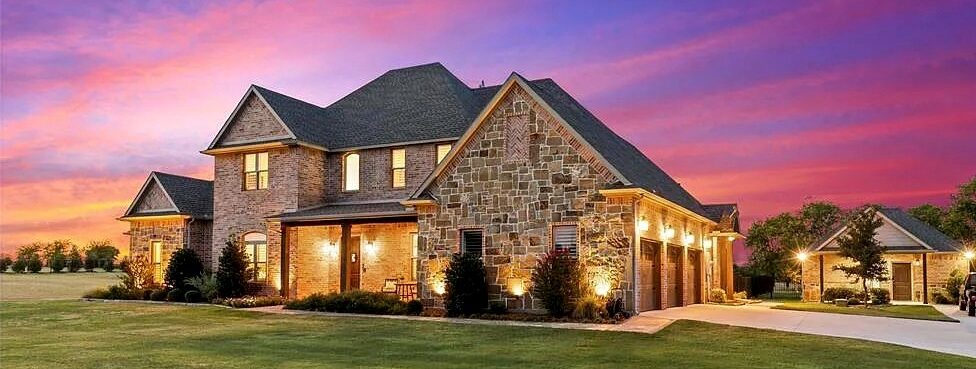

Custom Home & Pool Builders in
Plano, TX
Custom gunite pools across Legacy West, Willow Bend, Deerfield, and Kings Ridge. DSH Homes and Pools brings 30 years of construction experience and clay soil engineering to every Plano backyard. Free estimates, financing available.
Licensed in TX | 5.0/5 Google Rating | Local Collin County Crews | BBB Accredited, A Rating
Bringing Dreams to Life
Quality Design & Expert Craftsmanship
About Our Home Building Company
With over 30 years of experience in home building in the Plano, TX, Willow Bend, West Plano, Legacy West, Park Forest, our team at DSH has established a legacy of excellence. We have been perfecting the art of building homes and pools that exceed our customers’ expectations. This longevity allows us to navigate Plano’s evolving real estate market, from the historic charm of Park Forest to the contemporary luxury of Legacy West. Homeowners in Willow Bend trust us for our proven track record in high-end custom builds, often featuring smart home integrations and sustainable materials. In West Plano, we’ve completed dozens of projects emphasizing family-friendly floor plans with seamless indoor-outdoor flow via custom patios and pools. Our repeat clients and referrals from these areas underscore our commitment to quality, with many homes earning accolades for craftsmanship and durability.
Our Custom Home Building Philosophy
At DSH, we believe that strong relationships are the foundation of exceptional homes and pools. We maintain the highest standards of integrity in every interaction with our customers, partners, and tradespeople. Our commitment to innovation, craftsmanship, and attention to detail results in homes and pools that are not only visually appealing but also functional and comfortable. In Plano, TX, this philosophy shines through in our collaborative design process, where we incorporate local preferences like open kitchens for Willow Bend entertainers and climate-resilient features for West Plano’s hot summers. Legacy West builds often include tech-forward elements such as automated lighting and security, while Park Forest homes prioritize timeless elegance with durable, low-maintenance pools. We follow a structured four-step workflow: initial consultation. This begins with BIM modeling for precise 3D visualizations, followed by material sourcing from certified suppliers like James Hardie and Pella Windows. to capture your vision, detailed 3D design collaboration, precise construction with premium materials, and a thorough final walkthrough to ensure satisfaction..
Your Trusted Plano Home Builder Partner
From selections to closing and beyond, our dedicated team is here to guide you every step of the way. We are passionate about building homes and pools that we would be proud to call our own, and we look forward to helping you bring your dreams to life. Serving Plano, TX, Willow Bend, West Plano, Legacy West, and Park Forest, we offer personalized guidance on material choices suited to local aesthetics. Options include natural limestone veneers, standing-seam metal roofing, and Trex composite decking for poolsides, all backed by comprehensive manufacturer warranties.—think limestone exteriors for Willow Bend’s elegance or sleek metal roofing for Legacy West’s modern edge. Our post-closing support includes warranties and seasonal maintenance tips for Texas weather, ensuring your investment thrives. Past clients rave about our transparency, with testimonials highlighting on-time deliveries and budgets stayed under by an average of 5% through efficient sourcing..
Why Plano homeowners choose DSH Homes and Pools
Plano is the eighth-largest city in Texas, with more than 280,000 residents and some of the highest-value residential properties in Collin County. We’ve built pools for over 30 years, and the soil challenge is the same one that affects every city in the DFW corridor: expansive clay. This clay absorbs water and swells after spring storms, then dries and contracts through the long Texas summer. That cycle puts constant pressure on anything embedded in the ground. In established west Plano neighborhoods like Willow Bend and Deerfield, mature tree root systems compound the problem by drawing moisture unevenly through the soil. Every DSH pool shell is engineered with pier systems and reinforced steel designed specifically for these conditions.
DSH pulls every permit directly with the City of Plano building department and meets the inspector on site for each phase. Plano’s HOAs, particularly in communities like Kings Ridge, Normandy Estates, and Avignon Windhaven, have detailed design review requirements covering pool fencing height, equipment enclosure materials, setbacks from property lines, and finish specifications. We handle the full HOA submission packet before excavation begins. DSH has completed pool builds for Plano homeowners and earned five-star reviews from Plano customers specifically.
Our McKinney dispatch is approximately 20 minutes from Arbor Hills Nature Preserve on the west side of Plano. Crew leads work in Plano daily and know the permitting cadence, inspection scheduling, and HOA process for each major subdivision. The truck that shows up at your property has a local number, (903) 321-3172. Owner Derek Humphreys has spent 30 years building across Collin County. Project Manager Kyle Bailey oversees every Plano build on the ground. Derek is accessible to every client directly, not through a call center.
Home and pool building services we offer in Plano
All services available across every Plano neighborhood, from Legacy West to Ridgeview Ranch Estates and everywhere between.
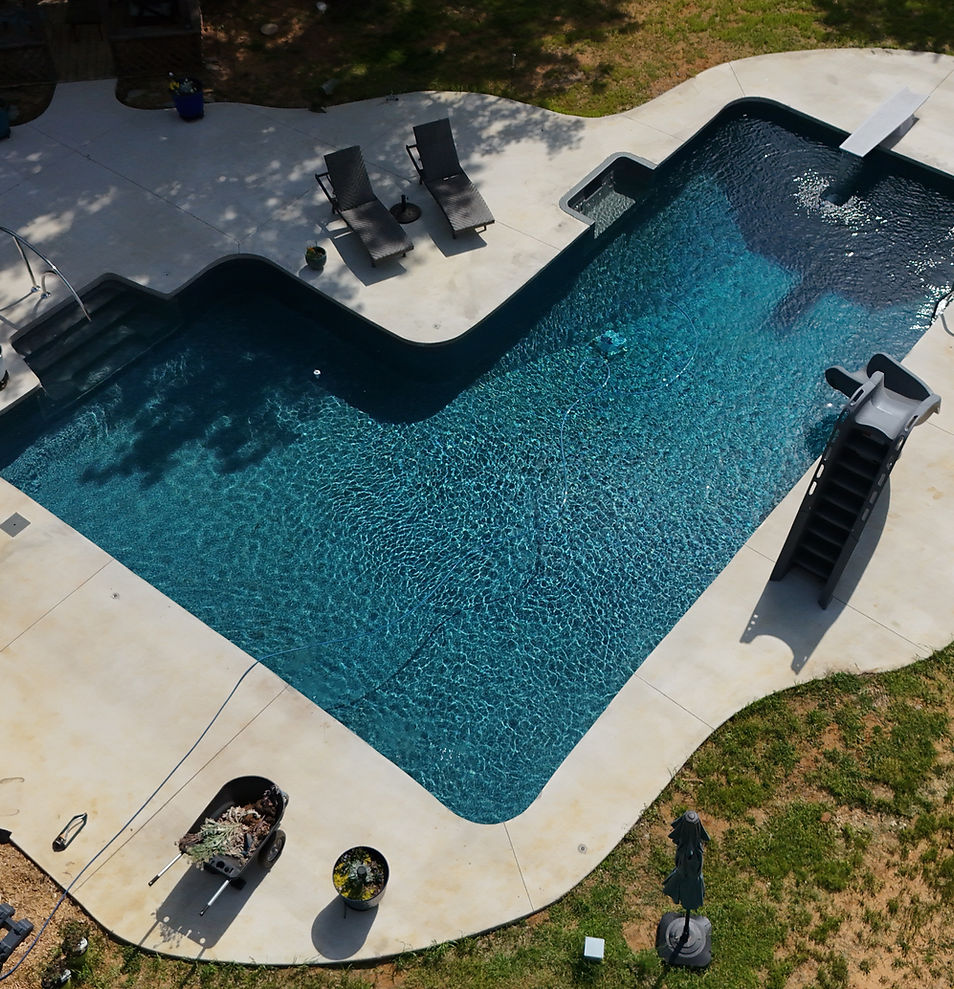
Pool Construction
You have a backyard and a vision, but turning that into a finished gunite pool takes engineering, excavation, plumbing, and electrical coordinated on a single timeline. DSH handles every phase from permit to plaster, building custom inground pools designed for North Texas clay soil conditions.
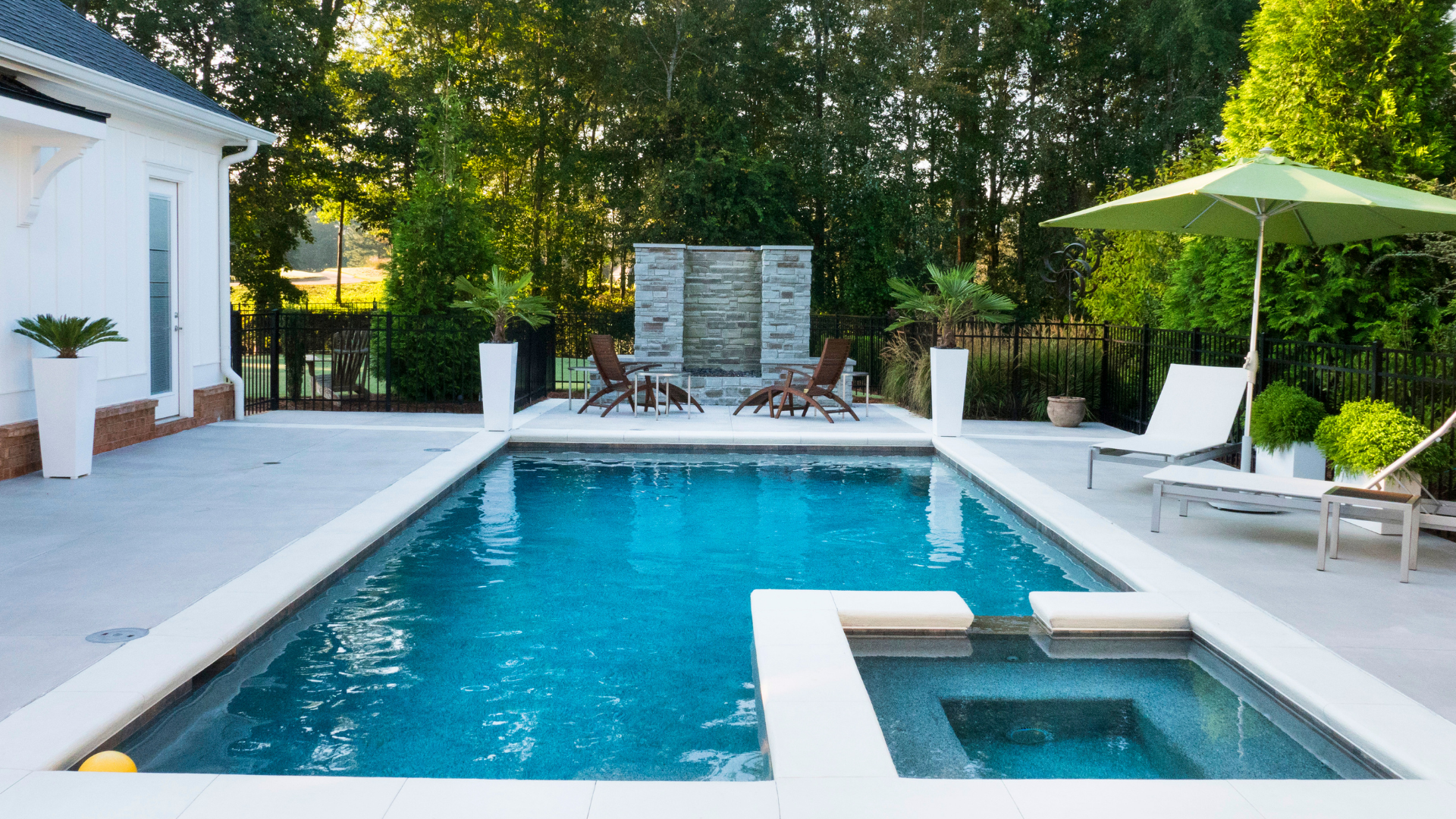
Pool Renovations
Cracked plaster, outdated tile, or a pool that just does not match the house you have now. DSH resurfaces, retiles, replumbs, and redesigns existing pools to look and function like new, including deck upgrades, coping replacement, and modern water features.

Custom Home Building
Building from the ground up on your own lot gives you control over layout, materials, and finishes down to the last outlet. DSH designs and builds custom homes across North Texas, from modern ranch plans to multi-story estates, managing permits, engineering, and construction in one contract.

Gunite Pools
Gunite is sprayed concrete reinforced with steel rebar, built to handle the expansion and contraction cycles that North Texas clay soil puts on every structure in the ground. DSH builds fully custom gunite pools in shapes and depths that fiberglass shells cannot match.
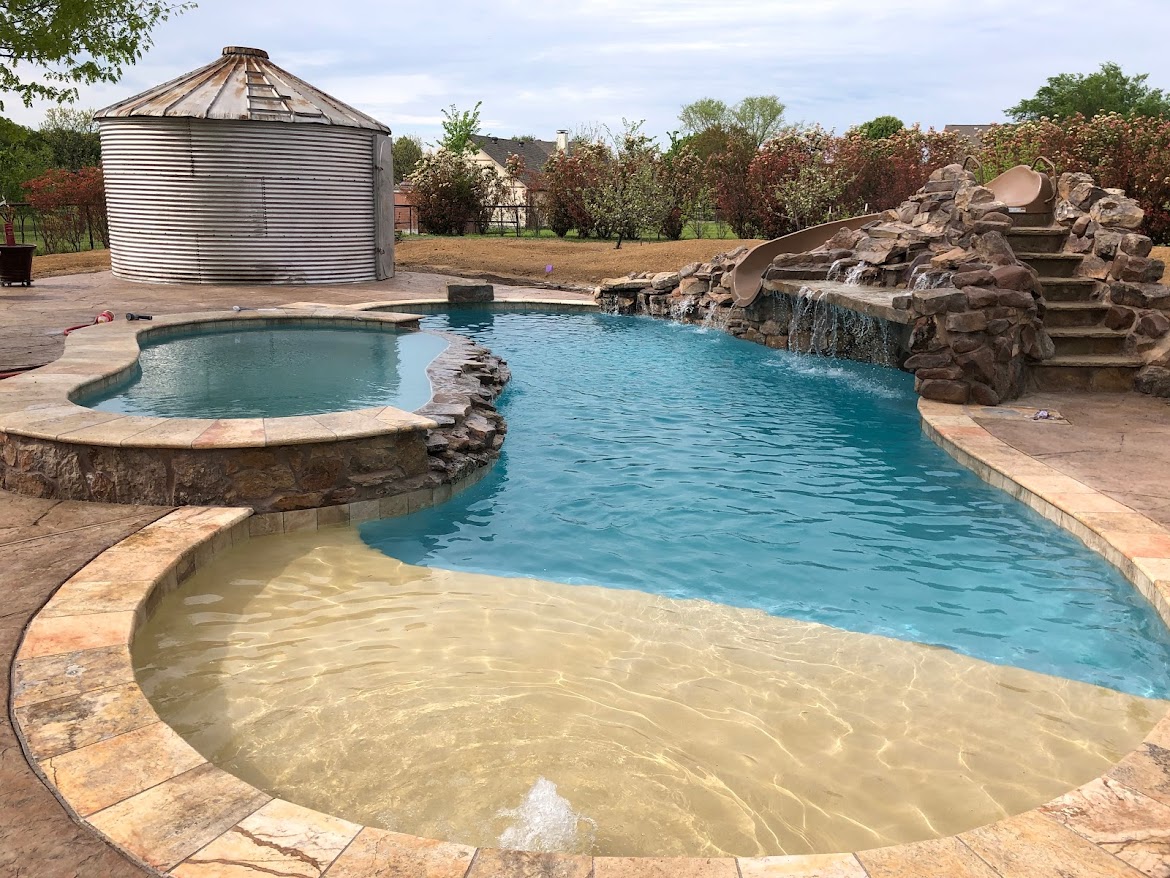
Plunge Pools
Not every backyard needs a 40-foot pool. Plunge pools fit smaller lots and tighter budgets while still giving you a place to cool off from May through October. DSH builds custom plunge pools with options for heating, jets, bench seating, and integrated spas.
Spas and Hot Tubs
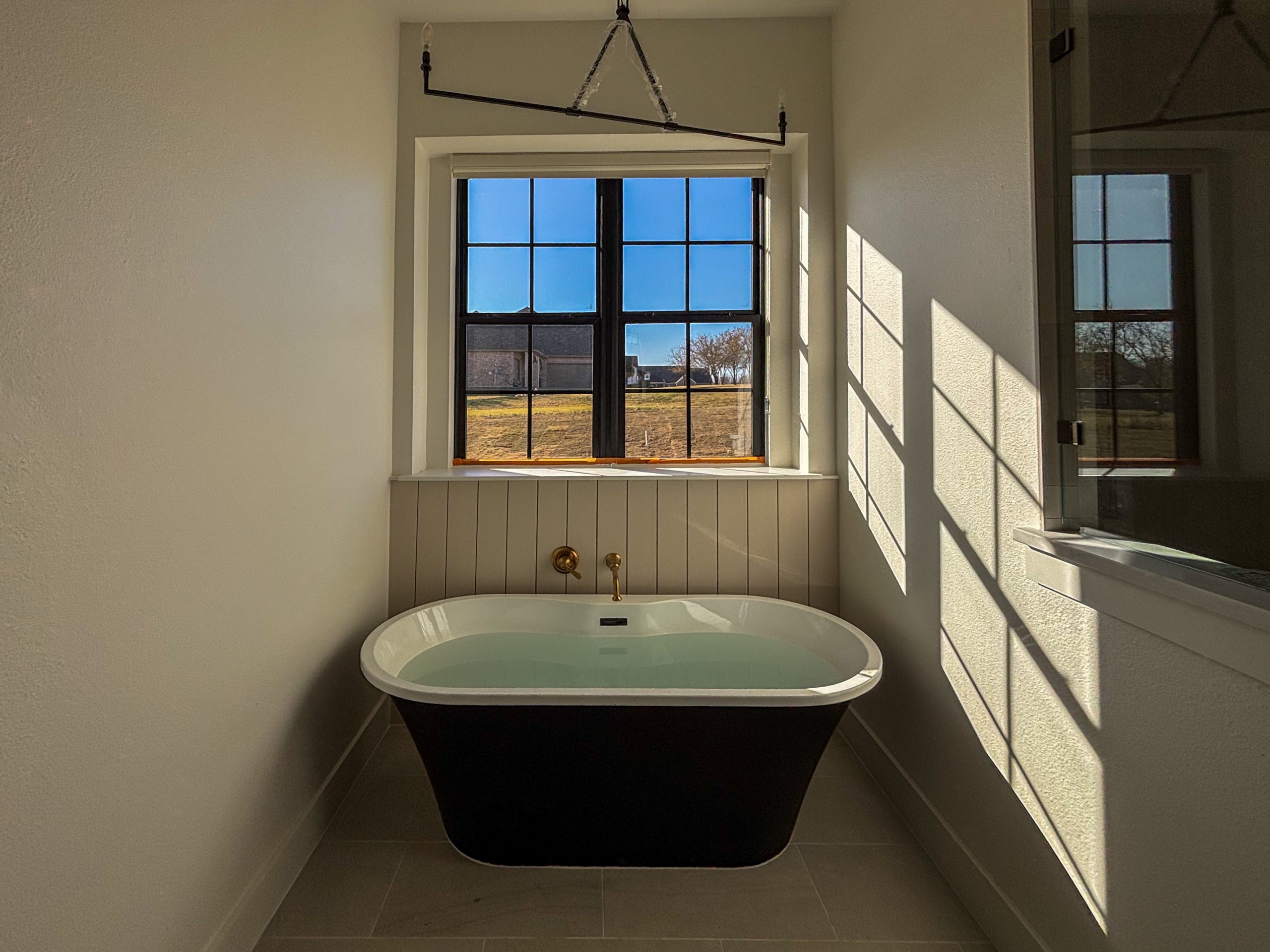
A standalone spa or a pool-attached hot tub extends your backyard season past pool weather. DSH builds custom spas with adjustable jets, LED lighting, and heating systems that run independently from the main pool, so you can use them year-round.
CRAFTING HOMES AND POOLS
BRING YOUR
DREAM HOME
TO LIFE
Crafting a custom home or pool is a thrilling experience that allows you to create a space that perfectly reflects your personality and style. From selecting the ideal floor plan to choosing the finishing touches, every detail is a chance to make your home or pool truly unique.
Whether you envision a sleek, modern design or a cozy, rustic retreat, the possibilities are endless. With the expertise of our skilled builders and designers, we’ll guide you through every step of the process to bring your vision to life.
Let’s start building your dream home or pool today!
Frequently Asked Questions
Yes. DSH has completed pool builds across Legacy West, Willow Bend, Deerfield, Kings Ridge, Normandy Estates, Avignon Windhaven, and most other Plano neighborhoods. Each community has different HOA requirements and permitting processes, and we handle every step from application through final inspection.
Plano sits on the same expansive clay found across Collin County. This clay swells when wet and shrinks when dry, creating ground movement that will crack a pool shell that lacks proper engineering. In mature west Plano neighborhoods like Willow Bend and Deerfield, tree root systems draw moisture unevenly through the soil, adding complexity. DSH uses pier systems, reinforced steel cages, and chemical soil stabilization to build pool shells that handle these conditions for the full life of the pool. This engineering adds cost depending on lot conditions, but it is the difference between a pool that lasts three decades and one that cracks in two years.
City of Plano permits typically run 4 to 6 weeks. HOA design review in communities like Kings Ridge, Normandy Estates, and Avignon Windhaven adds another 2 to 4 weeks. Some gated communities require architectural committee approval, which can extend the timeline further. DSH handles both the city permit application and the HOA submission. We meet the inspector on site for every required phase and keep you updated on status.
Our McKinney dispatch is approximately 20 minutes from west Plano. Crews work in Plano daily and know the permitting cadence, inspection process, and HOA submission requirements for each major subdivision. Owner Derek Humphreys has 30 years of experience across Collin County and oversees every Plano project. Project Manager Kyle Bailey is on site for each build. You can reach us directly at (903) 321-3172
Yes. DSH partners with multiple lenders to offer financing options for qualified Plano homeowners. Visit https://dshbuild.com/financing/ or call (903) 321-3172 to get pre-qualified during your free design consultation.
DSH builds both custom homes and custom pools under the same roof. Your pool’s plumbing, electrical, drainage, and structural engineering are all coordinated with your property as a single project rather than being designed as an afterthought by a second contractor. We are BBB Accredited with an A rating. Derek Humphreys is accessible to every Plano client directly. No call center, no project managers you never meet. One team, one contract, one point of accountability from design through final water startup.
Start Your Custom Home Project Today
Let us bring your vision to life with unparalleled quality,
craftsmanship, and customer service.
Your Plano Custom Home and Pool Builder
Occupying approximately 72 square miles in Collin and Denton counties roughly 20 miles north of downtown Dallas, Plano represents something genuinely significant in American suburban evolution—a city of approximately 285,000-290,000 residents whose transformation from farmland in the 1950s to master-planned bedroom community in the 1970s-1980s to corporate headquarters hub in the 1990s-2000s through aggressive recruitment of Fortune 500 companies, development of Legacy business district creating concentrated office employment, and positioning as premier family suburb offering excellent schools, affluent demographics, and suburban amenities has created conditions where Plano functions as the Dallas-Fort Worth metroplex’s most successful incorporated suburb, where corporate campuses employing tens of thousands anchor an economy transcending bedroom community status, where educational excellence attracts families willing to pay premium housing costs for school access, and where the tension between maintaining suburban character and accommodating urban-scale development creates ongoing debates about density, traffic, redevelopment of aging 1970s neighborhoods, and whether Plano’s maturity as largely built-out city requires fundamental reconsideration of the growth-oriented policies that created contemporary success.
The name “Plano” derives from the Spanish word for “flat” or “plain,” referencing the level prairie landscape that developers would transform into one of America’s most successful suburbs. The area remained agricultural through the mid-20th century, with cotton farming, small communities, and rural character dominating. The northward expansion of Dallas along Central Expressway (US Highway 75) during the 1960s-1970s reached Plano, with developers purchasing farmland for residential subdivisions attracting families seeking affordable new housing, good schools, and suburban lifestyle alternatives to Dallas urban environment.
The master-planned community concept shaped Plano’s development, with large-scale projects like Willow Bend creating comprehensive residential developments with parks, schools, shopping centers, and thousands of homes following cohesive design principles rather than piecemeal construction. This planned approach created the infrastructure, amenities, and aesthetic coherence distinguishing successful suburbs from haphazard sprawl.
However, Plano’s transformation from bedroom community to corporate hub represents its most significant evolution. The aggressive recruitment of corporate headquarters—particularly in telecommunications and technology sectors—brought companies including J.C. Penney, Frito-Lay, Dr Pepper, Electronic Data Systems, Perot Systems, and numerous others establishing operations in Plano. The development of Legacy—mixed-use business district along the Dallas North Tollway—created concentrated office employment housing corporate campuses, hotels, restaurants, and retail in urban-density development unusual for suburbs.
These corporate relocations transformed Plano’s character and fiscal position. The employment base created daytime population vastly exceeding residential numbers, the commercial property tax base funded superior city services without requiring high residential property taxes, and the concentration of white-collar professional employment attracted educated affluent residents whose presence further enhanced schools and amenities creating self-reinforcing cycle of success.
Contemporary Plano confronts challenges of maturity as largely built-out city where remaining developable land becomes scarce, where aging 1970s-era neighborhoods and retail centers require redevelopment, where traffic congestion strains infrastructure, and where housing affordability challenges exclude working-class populations creating demographic and economic homogeneity raising questions about inclusivity and sustainability.
Demographics
Plano’s demographic profile reveals affluent, highly educated, surprisingly diverse community whose characteristics distinguish it as one of America’s most successful and economically dynamic suburbs.
The population of approximately 285,000-290,000 residents represents substantial growth from 17,872 in 1970, 72,331 in 1980, 128,713 in 1990, and 222,030 in 2000, demonstrating explosive expansion that has slowed as the city approaches build-out. Recent growth remains modest (2-3% annually) as available land diminishes and development shifts to redevelopment and infill rather than expansion.
Population density approaches 3,950-4,030 persons per square mile—relatively high for suburbs and reflecting the mature development patterns, apartment complexes supplementing single-family subdivisions, and urban-density Legacy business district creating concentrated populations.
Racial and ethnic composition shows substantial diversity unusual for affluent suburbs. White residents comprise approximately 55-58% of the population—majority but not overwhelming dominance. Asian residents represent approximately 20-22%—extraordinary concentration making Plano one of America’s highest Asian-percentage suburbs, reflecting corporate relocations (particularly telecommunications and technology companies) bringing Indian, Chinese, Korean, and other Asian professional populations. Hispanic or Latino residents comprise approximately 15-17%, and Black or African American residents approximately 8-9%, creating genuine multiethnic character.
This diversity reflects both corporate employment attracting global talent and the particular dynamics where rapid growth, varied housing options, and multiple communities within Plano enable diverse populations to establish neighborhoods matching their preferences while the overall city maintains diversity. However, geographic sorting persists where different subdivisions show varying racial and economic compositions.
The Asian population concentration—among the highest percentages nationally for cities Plano’s size—creates visible cultural presence through Asian grocery stores (H Mart, 99 Ranch Market), restaurants representing varied Asian cuisines, cultural organizations, and the particular achievement culture that Asian populations bring to schools creating academic intensity that some families embrace and others find excessive.
Age distribution shows mature suburban profile. Median age approaches 38-40 years—near national averages and reflecting mix of established families, empty-nesters aging in place, and younger families with children. The population includes substantial school-age presence though less dominated by young families than rapidly growing suburbs still in expansion phase.
Household income statistics reveal exceptional affluence. Median household income exceeds $85,000-95,000 annually—substantially above national median ($75,000) and Texas state median ($64,000), reflecting professional employment in corporate campuses, technology sector, healthcare, finance, and business services. Income distribution shows substantial representation exceeding $125,000-175,000 annually, with many households surpassing $200,000+ through dual professional incomes and high-earning positions.
Poverty rates remain low—approximately 7-9%—indicating overwhelming majority of residents experience economic security. This low poverty reflects the economic filtering that housing costs and development patterns create.
Housing costs demonstrate Plano’s premium positioning within North Texas. Single-family homes in standard subdivisions typically range from $320,000-450,000 for average properties to $550,000-850,000 for larger homes in desirable neighborhoods. Luxury properties in West Plano exceed $1-1.5 million+, while older East Plano neighborhoods offer more affordable options at $250,000-350,000.
Extensive apartment complexes provide rental housing at $1,200-2,200 monthly for typical units, enabling access for younger professionals, corporate relocations, and those not yet purchasing homes. The rental market serves substantial populations in transition or preferring rental flexibility.
Educational attainment reaches exceptional levels. Bachelor’s degree attainment exceeds 55-60%—dramatically above national averages (33%) and Texas state levels (30%), reflecting corporate professional populations. Graduate and professional degrees are held by 25-30% of adults, indicating substantial representation in fields requiring advanced credentials—engineering, medicine, business, law, technology.
Education
Education in Plano operates through Plano Independent School District, one of Texas’s largest and highest-performing districts. The district operates numerous elementary schools, middle schools, and high schools (Plano Senior, Plano East, Plano West, Jasper, others), enrolling approximately 53,000-55,000 students across all grades.
Student demographics show approximately 38-40% white enrollment, 30-32% Asian enrollment (extraordinary concentration driving academic intensity), 20-22% Hispanic enrollment, and 9-11% Black enrollment—substantial diversity. Free and reduced-price lunch eligibility approaches 30-35%, indicating meaningful economic diversity though substantially below high-poverty districts.
Academic performance demonstrates exceptional results ranking among Texas’s elite districts. Standardized test (STAAR) proficiency rates substantially exceed state averages—approximately 82-87% meeting standards in reading and 80-85% in mathematics. SAT scores average approximately 1180-1220—dramatically above national averages (1050) and reflecting exceptional college preparation.
Graduation rates approach 95-97%—virtually universal completion. The Texas Education Agency accountability rating shows “A” performance—highest rating indicating exemplary outcomes meeting all state standards.
Per-pupil spending approximates $10,000-11,000 annually—typical for Texas and reflecting moderate state funding supplemented by substantial local property tax base. The spending enables comprehensive operations, competitive teacher salaries, modern facilities, and programming that resource-constrained districts cannot provide.
The district offers extraordinary Advanced Placement programming with dozens of AP courses available, enabling students to earn substantial college credit. Competitive athletics, particularly football generating intense community engagement, comprehensive fine arts programs, career and technical education, and college preparatory curriculum align with affluent family expectations.
College attendance among graduates exceeds 85-90%—among Texas’s highest rates. Students attend varied institutions including Ivy League universities, top-tier public flagships (UT Austin, Texas A&M, UCLA, UC Berkeley), elite private colleges, and competitive institutions nationwide. The achievement culture—driven substantially by Asian populations bringing educational intensity and high expectations—creates environment where college attendance represents universal expectation rather than aspiration.
The schools benefit from extraordinary advantages: students arriving exceptionally well-prepared from educationally-rich home environments, parents with advanced degrees able to provide extensive support and supplementation, family stability and economic security, and community resources providing volunteers and advocacy. However, the academic pressure generates concerns about student stress, mental health impacts, and whether the achievement culture creates unhealthy competition and anxiety that counseling resources struggle to address adequately.
Tourism
Tourism in Plano operates at minimal levels, with the city functioning primarily as residential community and corporate employment center rather than visitor destination.
Legacy West—mixed-use development along Dallas North Tollway—provides upscale shopping, dining, hotels, and entertainment creating destination appeal for regional visitors. The development includes The Shops at Legacy (outdoor retail center), hotels (Westin, Renaissance), restaurants (Del Frisco’s, The Capital Grille, varied concepts), and entertainment options. However, Legacy serves primarily regional populations seeking dining and shopping rather than tourists traveling specifically to visit Plano.
The Heritage Farmstead Museum preserves Victorian-era farm buildings documenting Plano’s agricultural heritage, attracting school groups and history enthusiasts but minimal broader tourism.
Oak Point Park and Nature Preserve provides 801 acres of trails, lake access, and natural areas serving primarily Plano residents for recreation rather than attracting outside visitors.
Corporate campuses operate as employment centers rather than tourist attractions, with companies generally prohibiting public access to facilities.
Beyond these modest offerings, Plano lacks the major attractions creating significant tourism economies—no theme parks, major sports venues, natural wonders, or entertainment districts generating substantial visitor spending. The city functions as residential community and employment center rather than tourism destination.
For Plano’s approximately 285,000-290,000 residents, the city provides upper-middle-class to affluent suburban lifestyle—excellent schools enabling children’s educational success and advancement to elite universities, safe neighborhoods supporting family life, corporate employment opportunities offering high compensation, superior city services funded by commercial tax base, convenient access to Dallas attractions and employment, though confronting challenges of traffic congestion, housing costs excluding working-class populations, academic pressure affecting student wellbeing, aging infrastructure requiring investment, and fundamental questions about whether Plano’s maturity as built-out city enables maintaining the excellence that growth created or whether different approaches become necessary when expansion possibilities exhaust and redevelopment replaces development as primary planning challenge.
Addison TX
Allen TX
Anna TX
Aubrey TX
Blue Ridge TX
Carrollton TX
Celina TX
Copeville TX
Coppell TX
Dallas TX
Double Oak TX
Farmers Branch TX
Farmersville TX
Fate TX
Frisco TX
Garland TX
Gunter TX
Heath TX
Irving TX
Josephine TX
Lake Dallas TX
Lavon TX
Lewisville TX
Little Elm TX
McKinney TX
Melissa TX
Murphy TX
Nevada TX
Pilot Point TX
Plano TX
Princeton TX
Prosper TX
Richardson TX
Rockwall TX
Rowlett TX
Sachse TX
Sherman, TX
The Colony TX
Van Alstyne TX
Westminster TX
Weston TX
Wylie TX
75023
75024
75025
75026
75074
75075
75086
75093
75094
Legacy West
Willow Bend
Deerfield
Kings Ridge
Avignon Windhaven
Normandy Estates
Cypress Point
Gleneagles
Ridgeview Ranch Estates
Chapel Creek Farms
Preston Meadow
Lakeside on Preston
Windhaven
Hunters Glen
The Enclave
Old Shepard Place
Ready to Build Your Custom Home in Plano?
Let’s connect and turn your vision into a reality! Whether you’re in Plano, TX, dreaming of a Willow Bend luxury estate, a West Plano family retreat, a Legacy West modern marvel, or a Park Forest timeless haven, our team is ready with free estimates, virtual tours of past projects in your neighborhood, and a no-obligation consultation to outline costs, timelines, and design options tailored just for you.